

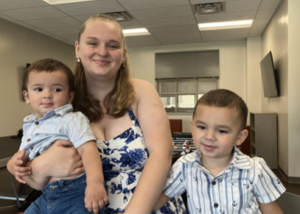
Samantha endured extraordinary challenges from an early age. Raised by her adopted mother since she was two years old, conflict in the family built over the years and ultimately forced her to leave. At the tender age of 16, Samantha found herself homeless.
To pursue a better life, she moved from Springfield, MA, to New Haven to live in the home of her future mother-in-law. But she eventually learned that this household, too, was unstable. Once again, she found herself homeless – but this time, with two young children.
Frightened and unsure of her future, Samantha heard about 211 and dialed.
Our 211 Contact Specialist listened, learned about Sanantha’s needs, and helped her begin her journey to a better life. The information and resources Samatha received allowed her to secure space at Columbus House, a New Haven shelter. Adjusting to her new environment was difficult at times, but Samantha now had a sense of hope that inspired her to keep taking action to improve the situation for herself and her boys.
Connecting to a Coordinated Access Network (CAN) Case Manager through United Way of Greater New Haven, she enrolled her sons in an Early Head Start program facilitated by the Elizabeth Celotto Child Care Center, which provides free child care to young parents who want to pursue their educations. Samantha would be able to finish high school.
After earning her diploma, Samantha secured a two-bedroom apartment her family could call home. Today, she is a graduate of United Way’s Parent Leadership Training Institute, a program that equips parents and caregivers to advocate for their children and their communities effectively.
One call to 211 began Samantha’s journey to a better life. She’s glad she called – and she’s grateful for the resources and services that have helped her on her journey to a better life for herself and her children.
“These programs are very important for people like me,” she says, “and not only for people like me, but for people as a whole. We need these resources. These programs are a second chance for us to have help, and to know that we’re not alone.”